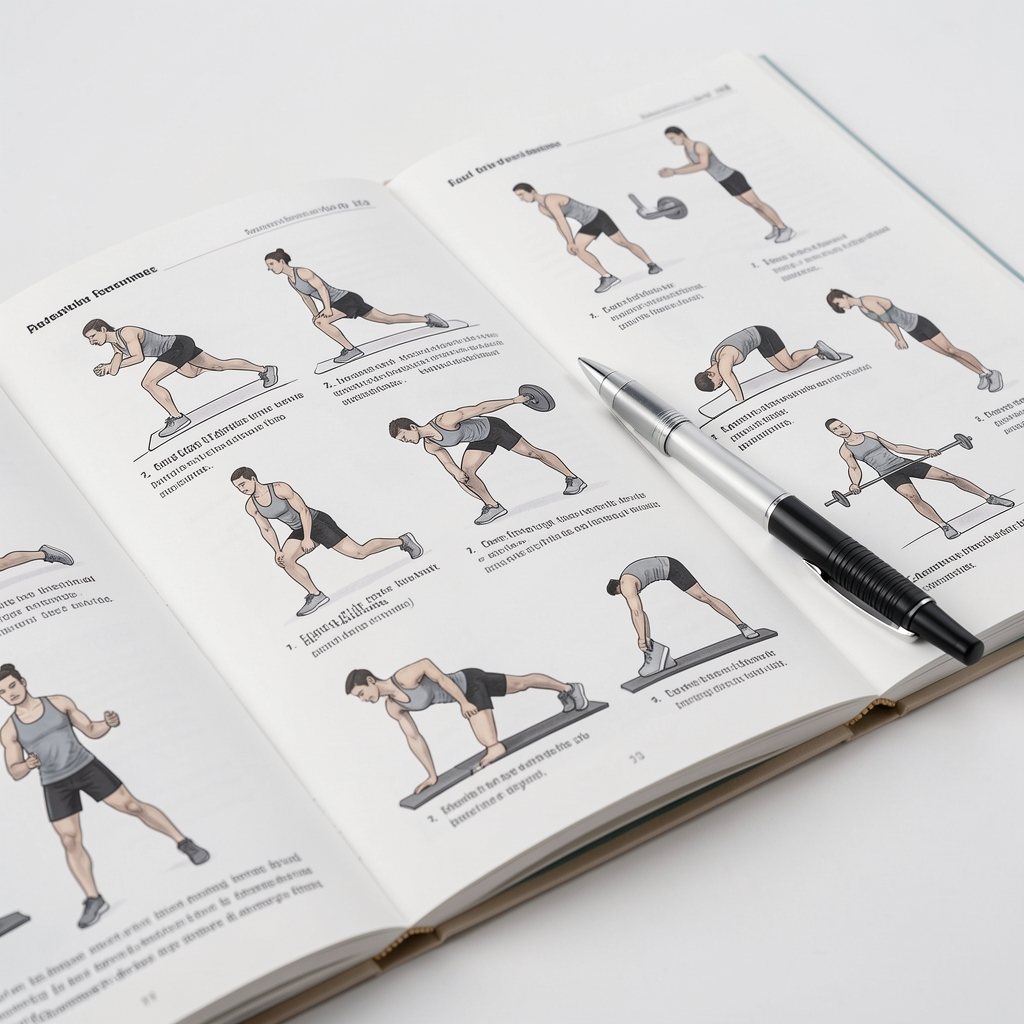
A Broader Field Than Commonly Described
In popular accounts of pelvic floor health, exercise is frequently described in singular terms — a single type of contraction, a single protocol, a single set of instructions. The movement education and physical conditioning literature presents a considerably more varied picture. The pelvic floor, as an integrated component of the deep core system, is addressed through multiple categories of exercise, each with distinct mechanical principles and intended functional emphases.
Understanding the range of approaches described in this literature is useful for developing a general map of the field, recognising that different practitioners and traditions have emphasised different aspects of pelvic floor function for different contextual reasons.
Category One: Isolated Voluntary Contractions
The most widely recognised category in popular discourse is the isolated voluntary contraction — the deliberate, intentional engagement of the pelvic floor muscles independent of other movement. This category is most commonly associated with the name of Arnold Kegel, whose mid-20th-century research formalised the concept of deliberate pubococcygeus training.
Within this category, movement education literature distinguishes between two principal variations:
- Sustained contractions (slow-twitch emphasis): Held contractions of varying durations — typically between three and ten seconds in exercise science descriptions — designed to address the endurance capacity of the slow-twitch type I muscle fibres that constitute a significant proportion of the levator ani. These fibres are responsible for the postural, tonic support function of the pelvic floor.
- Quick contractions (fast-twitch emphasis): Brief, sharp contractions followed by immediate release, designed to address the reactive capacity of the fast-twitch type II fibres. This fibre type is relevant to the pelvic floor's ability to respond rapidly to sudden increases in intra-abdominal pressure — such as during coughing, sneezing or changes in loading.
Most exercise education protocols that address isolated voluntary contractions include both variations, recognising that the functional demands on the pelvic floor involve both sustained tonic support and rapid reactive responses.
Category Two: Relaxation and Lengthening Approaches
A category that receives considerably less attention in popular discourse — but is discussed with equal importance in movement rehabilitation literature — is the deliberate relaxation and lengthening of the pelvic floor. This addresses a distinct functional quality: the ability of the pelvic floor to fully release muscular tension after contraction.
Why Relaxation Matters
Movement educators note that for individuals with elevated resting pelvic floor tone — a condition sometimes described as hypertonic — strengthening approaches that focus exclusively on contraction may be poorly matched to the underlying functional pattern. A pelvic floor that cannot fully relax between contractions has impaired coordination, regardless of its contractile force.
Relaxation-oriented approaches in movement education include deliberate exhalation-led release, progressive muscular relaxation techniques applied to the pelvic region, and positions that mechanically unload the pelvic floor through gravity and skeletal positioning. The distinction between contraction-dominant and relaxation-dominant approaches represents one of the most practically significant differentiations in pelvic floor exercise education.
Category Three: Breathing-Integrated Approaches
The anatomical relationship between the diaphragm and the pelvic floor — both forming opposing boundaries of the deep core pressure system — has given rise to a category of exercise that addresses pelvic floor function primarily through the coordination of breathing mechanics.
In these approaches, the respiratory cycle provides the organising framework. During natural, diaphragmatic inhalation, the diaphragm descends and the pelvic floor descends in a coordinated response to intra-abdominal pressure changes. During exhalation, the diaphragm and pelvic floor return toward their resting positions. Breathing-integrated exercises work to restore or reinforce this natural coordination where habitual breathing patterns have become restricted or predominantly thoracic in character.
This approach is particularly prominent in the Pilates tradition and in contemporary physiotherapy-influenced movement education, both of which emphasise the role of breath as a primary tool for accessing and coordinating deep core musculature.
Category Four: Functional Integration
Functional integration approaches embed pelvic floor awareness within compound movement patterns rather than addressing the pelvic floor in isolation. The underlying principle — well-represented in sports conditioning and movement education literature — is that the pelvic floor functions as an integrated component of the musculoskeletal system during all movement, and that developing its functional capacity therefore requires practice within realistic movement contexts.
Movements commonly used in this category include:
- Hip hinge patterns, in which the deep core is loaded through controlled posterior chain engagement
- Squatting mechanics, which provide significant pelvic floor loading through the range of hip flexion
- Controlled rotational movements of the trunk, which challenge the deep core's ability to maintain stability through asymmetric loading
- Gait and walking patterns, in which the pelvic floor activates reflexively as part of the natural locomotor system
Category Five: Aquatic Exercise Contexts
Aquatic environments modify the mechanical context of exercise through buoyancy — which reduces gravitational loading on the musculoskeletal system — and hydrostatic pressure, which provides a consistent external compressive environment around the submerged body. Movement education literature notes that the pelvic floor operates under different loading conditions in an aquatic environment compared to land-based contexts.
Aquatic exercise is discussed in physical conditioning literature as a context in which individuals with reduced load tolerance or difficulty engaging pelvic floor musculature in standard positions may find it easier to develop initial body awareness and basic activation patterns, before progressing to more mechanically demanding land-based contexts.
Exercise Terminology
Comparing the Categories
The five categories described above are not mutually exclusive — movement education programmes frequently incorporate elements from multiple categories within a single framework. What the categorisation illustrates is that pelvic floor exercise, as discussed in the educational and conditioning literature, is a diverse field with different tools appropriate to different functional starting points, environmental contexts and conditioning objectives.
Understanding this diversity is relevant for anyone seeking to make sense of the varied terminology and approaches encountered in physical education materials on the subject — and for recognising that no single category represents a complete or universally applicable approach to the topic.
This article describes exercise categories from an educational perspective only. It does not provide individualised guidance and is not intended to direct any specific course of physical activity.