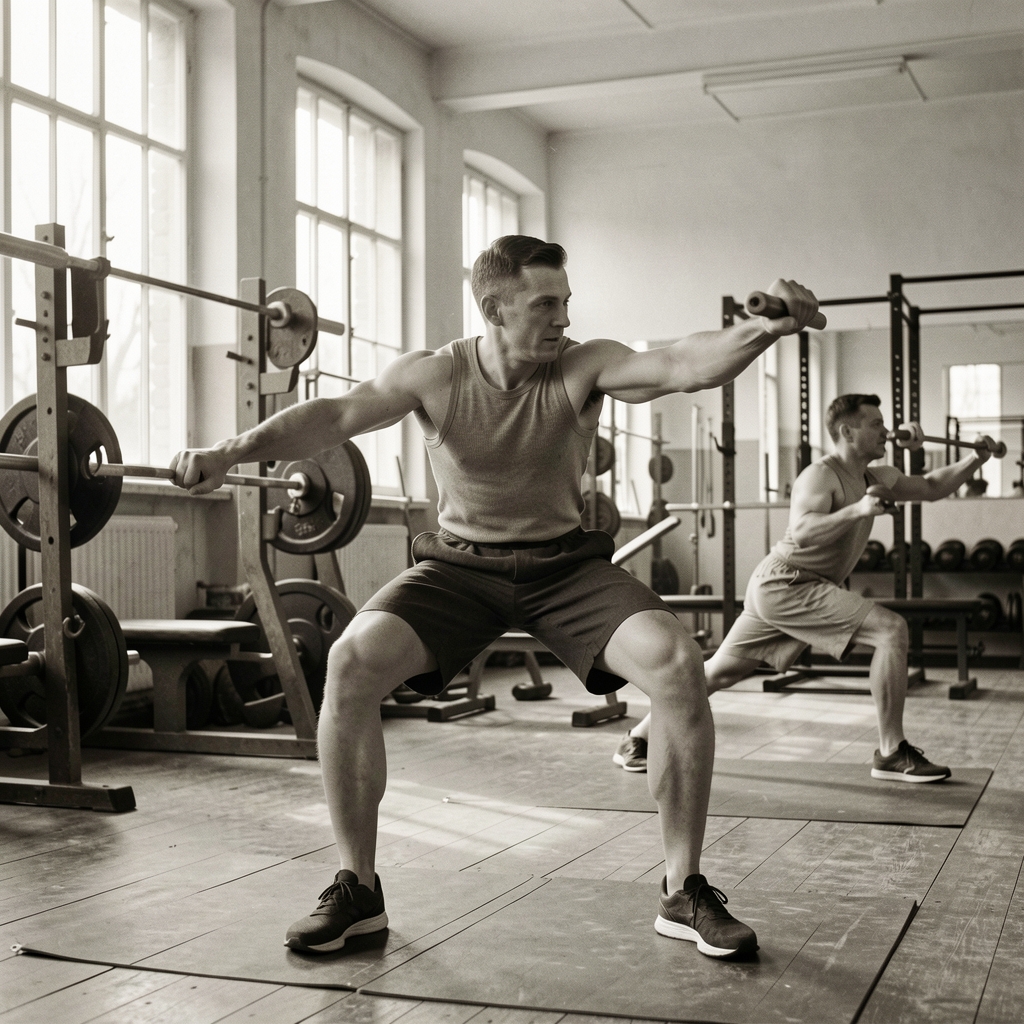
Foundations in Physical Culture
The organised study of bodily movement and muscular conditioning has a history that stretches back considerably further than the modern fitness industry. Physical culture — a broad term for systems of body training that emerged primarily in Europe during the 19th century — laid much of the groundwork for how core and pelvic strength would eventually be understood.
Figures such as Per Henrik Ling in Sweden and Friedrich Ludwig Jahn in Germany developed systematic approaches to physical conditioning that emphasised the integrated functioning of the body. These systems, while not addressing the pelvic floor by name, incorporated exercises that modern anatomists would recognise as engaging the deep core musculature — abdominal bracing, postural alignment work and controlled breathing patterns that activate intra-abdominal pressure mechanisms.
The Gymnastic Tradition and Core Emphasis
By the late 19th and early 20th centuries, gymnastic traditions across Europe had developed nuanced frameworks for understanding how the trunk and lower torso functioned during movement. Swedish gymnastics, which spread widely through British schools and military training by the early 20th century, placed particular emphasis on controlled, precise movements of the pelvis and lower spine.
These traditions approached the body as an integrated mechanical system. The emphasis was on muscular coordination, correct alignment and the ability to control movement through its full range — principles that would later be formalised in the anatomical study of the pelvic floor.
Yoga and Eastern Physical Traditions
Alongside Western physical culture, certain practices within Indian yogic tradition had long incorporated what are described in Sanskrit texts as mula bandha and ashvini mudra — practices involving voluntary contraction and control of the perineal and lower pelvic musculature. These were not understood in terms of Western anatomy but represented an independent tradition of deliberate engagement with the pelvic base.
As yoga became more widely studied and practised in Western contexts through the 20th century, practitioners and anatomy educators began mapping these traditional concepts onto the anatomical structures identified in Western research, creating a cross-cultural dialogue around the significance of the pelvic floor.
The Mid-20th-Century Anatomical Turn
The most significant development in public understanding of the pelvic floor as a distinct anatomical entity came in the late 1940s, when American gynaecologist Arnold Kegel published research drawing systematic attention to the pubococcygeus muscle and the role of voluntary muscular training in maintaining its function.
Kegel's work had an immediate and lasting effect on how the pelvic floor was discussed in physical education and anatomy. His contribution was less in discovering the muscles — which had been known to anatomists for centuries — and more in formalising the concept of deliberate, voluntary exercise of these specific structures and documenting the functional changes that could follow.
While Kegel's original publications were primarily concerned with female anatomy in a gynaecological context, the principles were recognised as applicable to male anatomy relatively quickly. The pubococcygeus and surrounding structures are present in male anatomy with comparable functional relevance, and the concept of voluntary pelvic floor engagement was extended to men in physical education and sports conditioning contexts through the second half of the 20th century.
Sports Science and the Deep Core Concept
From the 1970s through the 1990s, the emergence of sports science as an academic discipline brought renewed analytical attention to the muscles of the trunk and pelvis. Researchers studying athletic performance identified consistent patterns of deep muscle co-activation — particularly involving the transversus abdominis and the pelvic floor — that preceded and accompanied limb movement.
- Studies of trunk stability in the 1980s began linking pelvic floor function to spinal support mechanisms
- Research into athletic conditioning broadened the context from gynaecological to general physical performance
- The concept of the pelvic floor as part of an integrated pressure-management system — the deep core — gained traction in movement science
- Physiotherapy research in Australia and the United Kingdom contributed substantially to formalising assessment and exercise protocols for pelvic floor function in both men and women
The Contemporary Landscape
The first decade of the 21st century saw pelvic floor awareness move from specialist contexts into broader public health education. Greater availability of information, evolving attitudes toward men's physical well-being, and increased coverage in general fitness literature all contributed to a wider public understanding that the pelvic floor is relevant to male anatomy throughout adult life.
Contemporary discussion draws on the accumulated knowledge of all these traditions — physical culture, gymnastic conditioning, yogic practice, mid-century anatomical research, sports science and physiotherapy research — presenting the pelvic floor within a rich and varied historical context. Understanding this history helps situate current approaches and avoids the mistaken impression that pelvic floor awareness is a recent invention rather than a concept with deep roots across multiple traditions.
This article presents historical context for general informational purposes. It is not intended to advocate any specific approach or practice.