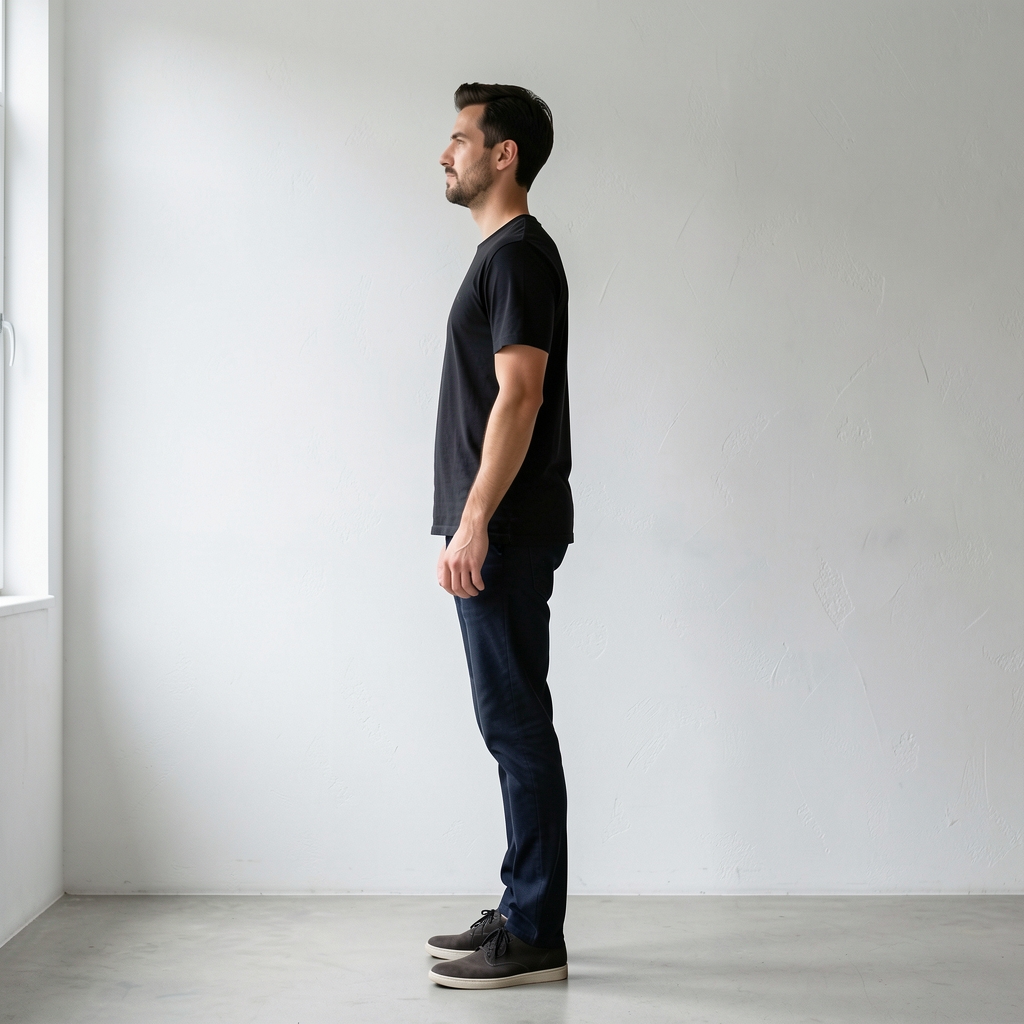
Posture as a Mechanical Context
In movement science and physical education, posture is understood not as a static position but as a dynamic, habitual configuration of the musculoskeletal system — the accumulated result of movement patterns, sedentary habits, occupational demands and physical conditioning history. The relevance of posture to pelvic floor function lies in the direct mechanical relationship between spinal and pelvic alignment and the resting position, length and activation patterns of the pelvic floor muscles.
The pelvis serves as the structural link between the spine above and the lower limbs below. Its orientation — anterior tilt, posterior tilt or neutral — directly influences the geometry of the pelvic outlet and therefore the resting length and tension of the pelvic floor muscles. This is not a marginal relationship: significant and sustained changes in pelvic position alter the mechanical environment in which the pelvic floor operates on a daily basis.
Pelvic Tilt and Its Consequences
Physical education and movement rehabilitation literature identifies several common postural patterns that influence pelvic position. Two of the most frequently discussed are anterior pelvic tilt and posterior pelvic tilt, each with distinct implications for deep core and pelvic floor function.
Anterior Pelvic Tilt
In anterior pelvic tilt, the front of the pelvis drops and the back rises, creating an exaggerated lumbar curve. This position places the pelvic floor in a shortened, anteriorly biased orientation. Movement educators note that sustained anterior tilt — common in individuals with tight hip flexors and relatively less active gluteal muscles — can influence the resting tone distribution across the pelvic floor, potentially contributing to asymmetrical activation patterns.
Posterior Pelvic Tilt
In posterior pelvic tilt, the reverse occurs: the back of the pelvis drops and the lumbar curve flattens or reverses. This position is commonly adopted during prolonged sitting in unsupported chairs and can place the pelvic floor in a lengthened, posteriorly biased position. Sustained posterior tilt is associated in movement education literature with reduced activation of the deep core musculature, including the pelvic floor.
The Neutral Pelvis Concept
Movement education programmes addressing deep core function typically work toward what is described as a neutral pelvic position — a range of alignment in which the anterior superior iliac spines and the pubic symphysis are roughly in the same vertical plane when standing. This position is described as mechanically optimal for coordinated deep core activation, as it places the pelvic floor, diaphragm and deep abdominal muscles in appropriate geometric alignment with one another.
Achieving and maintaining neutral pelvic position during movement requires a degree of mobility in the hip flexors and posterior chain, as well as adequate activation of the gluteal and deep abdominal musculature. Physical education programmes addressing posture for general physical well-being frequently address these prerequisites as part of a broad conditioning framework.
Core Strength: Terminology and Context
The term "core strength" is used widely in general fitness culture but is applied with varying degrees of precision. In movement science, the core is typically understood to include two interrelated systems:
- The deep stability system: comprising the transversus abdominis, deep multifidus, diaphragm and pelvic floor — structures that function primarily as postural stabilisers through tonic, low-level activation
- The outer muscle system: comprising the rectus abdominis, obliques, superficial erector spinae and gluteal muscles — structures that generate force and movement in more dynamic contexts
The distinction matters in a pelvic health context because many commonly described "core exercises" — such as sit-ups or crunches — primarily engage the outer muscle system and may generate significant intra-abdominal pressure without corresponding pelvic floor co-activation. Movement educators addressing deep core function therefore typically emphasise exercises that specifically recruit the deep stability system, where the pelvic floor is an active participant.
Spinal Alignment and Thoracic Contribution
Discussions of posture and pelvic health in movement education are rarely limited to the pelvis alone. The thoracic spine — the middle section of the back — has a significant indirect influence on pelvic floor function through its relationship with the diaphragm and rib cage mechanics.
A common postural pattern observed in sedentary adults involves thoracic kyphosis — rounding of the upper and mid back — combined with forward head position. This pattern alters the geometry of the rib cage and reduces the excursion available to the diaphragm during breathing. Since the diaphragm and pelvic floor function as coordinated components of the deep core pressure system, restrictions in diaphragmatic movement have downstream effects on pelvic floor coordination patterns.
Physical education materials addressing overall postural restoration therefore typically include thoracic mobility work alongside pelvic and lumbar approaches — addressing the system as an integrated whole rather than as a sequence of isolated segments.
Practical Implications for General Conditioning
From a general physical education perspective, the relationship between posture, core function and pelvic floor awareness has several practical implications for the design of general conditioning contexts:
- Addressing hip flexor length and gluteal activation before attempting isolated pelvic floor exercises may improve the mechanical context in which those exercises are performed
- Breathing awareness — specifically diaphragmatic breathing — is frequently incorporated into deep core conditioning programmes because of its direct influence on pelvic floor coordination
- Compound movement patterns (such as those involving controlled hip hinging and squatting mechanics) are described in sports conditioning literature as providing functional pelvic floor loading in mechanically appropriate contexts
- Awareness of sitting posture during prolonged desk work is a consistent theme in workplace ergonomics literature as a basic environmental factor relevant to deep core patterns
This article describes general physical education concepts for informational purposes. It is not intended to provide individualised guidance on any specific situation.